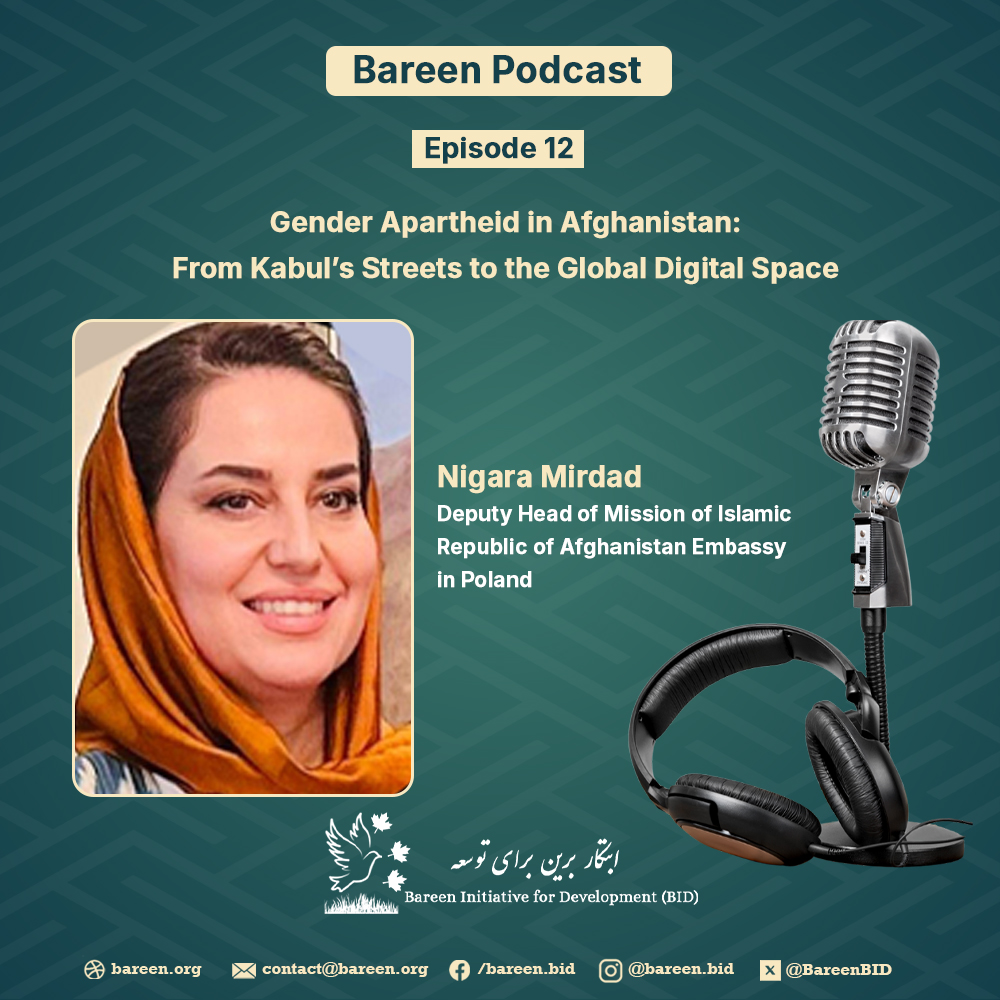
Gender Apartheid in Afghanistan: From the Streets of Kabul to the Global Digital Space — Episode 12 | Mrs. Nigara Mirdad
Understanding Gender Apartheid: Taliban Policies, Systematic Exclusion, and the Impact on Afghan Women
In this episode of the Bareen Podcast, Mrs. Nigara Mirdad, Deputy Ambassador of the Islamic Republic of Afghanistan in Poland, examines the nature of gender apartheid and its impact on the lives of women and girls in Afghanistan under Taliban rule.
Mrs. Mirdad explains how systematic Taliban policies and more than 200 decrees have progressively restricted women’s fundamental rights and excluded them from education, employment, government institutions, public life, and decision-making. Drawing comparisons with the historical apartheid system in South Africa, she discusses the legal, economic, social, and psychological dimensions of these restrictions.
Her discussion highlights how the exclusion of women extends beyond public institutions and affects their roles within families and communities. She also emphasizes the long-term consequences of economic exclusion, poverty, social isolation, and psychological harm, stressing the importance of providing support to Afghan women.
The episode explores the meaning and dimensions of gender apartheid, the systematic removal of women from society, and the urgent need to recognize and address the consequences of these policies.
Listen to Mrs. Nigara Mirdad’s perspective on gender apartheid, Taliban restrictions, and the challenges facing Afghan women.
Speaker: Mrs. Nigara Mirdad — Deputy Ambassador of the Islamic Republic of Afghanistan in Poland
Topic: Gender apartheid, Taliban policies, systematic exclusion, and the legal, economic, social, and psychological impact on Afghan women
Event: Gender Apartheid in Afghanistan: From the Streets of Kabul to the Global Digital Space
Organizer: Bareen Initiative for Development (BID), in collaboration with the NRF Women’s Council and the Global Equality Association.